Connection
Companionship After 55: How to Find Real Connection Again
July 5, 2026 · 7 min read
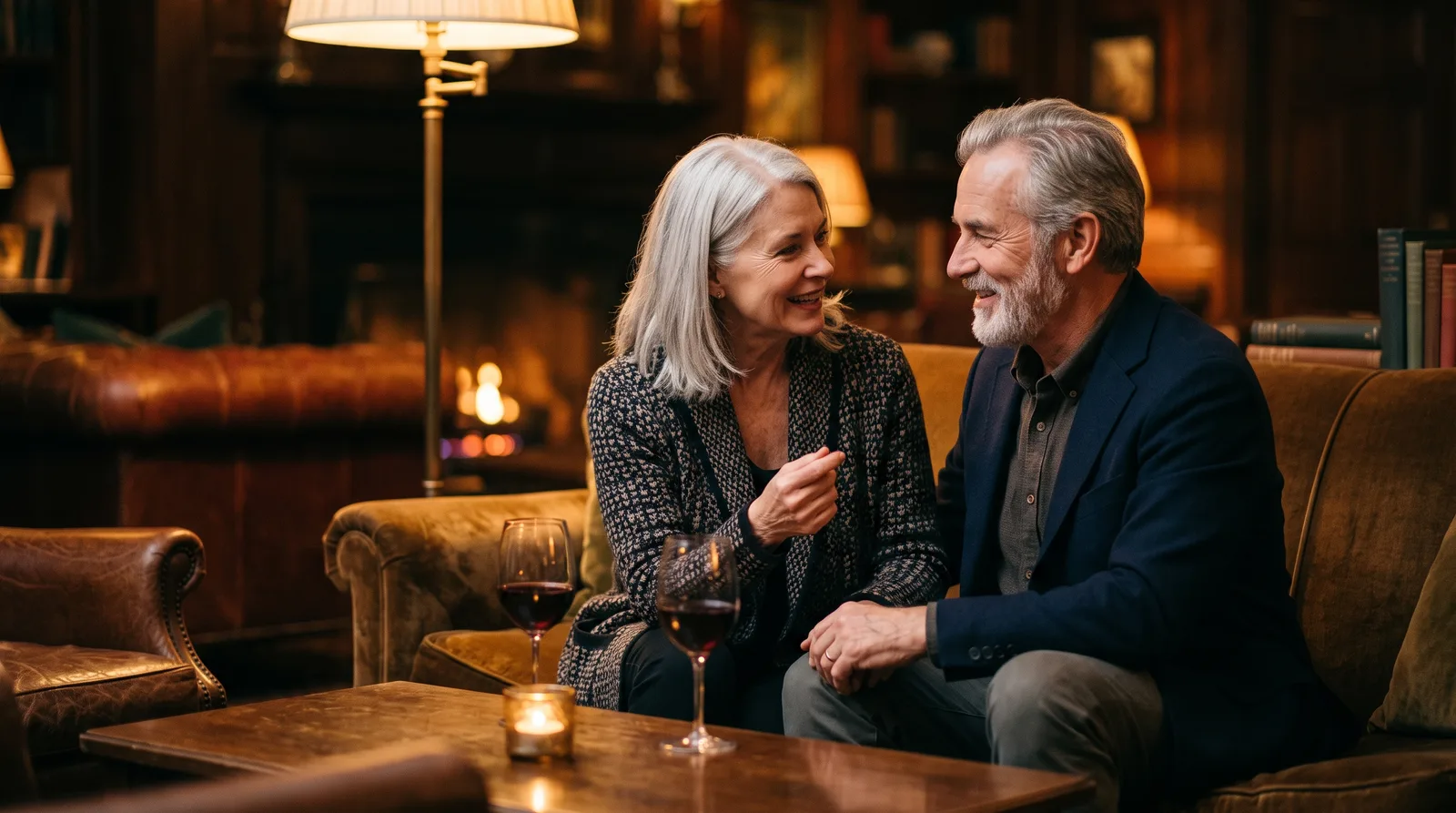
At some point after 55, the house gets quieter than you expected. The people who filled it have grown up, moved on, or moved away, and the calendar that once felt too full now has room you did not ask for. Wanting companionship after 55 is one of the most reasonable desires a person can have, and yet it is the one people apologize for most. They should not. Wanting good company again is not a weakness to manage. It is a sign you are still fully in your life.
The word companionship is broad on purpose. For some it means a handful of close friends who know the whole story. For others it means a romantic partner to share a table and a bed and the small news of the day. For most people it means both, in some proportion that shifts over time. All of it counts, and all of it is available if you go looking with a clear head and a little patience.
Why companionship after 55 is worth pursuing
There is a quiet story that says the time for new connection has passed, that friendships and romance belong to the young, and that anyone still hoping for them later is somehow behind. That story is wrong, and it costs people years. The truth is simpler. Human beings are built for company at every age, and the need does not politely retire when you do.
Pursuing companionship after 55 is worth the effort for reasons that are both felt and practical. Regular, warm connection is one of the strongest supports for a good later life, tied to how people describe their health, their outlook, and their sense of purpose. You do not need a study to know it. You know it from the difference between a week with a real conversation in it and a week without one.
And you arrive at this with advantages you did not have at 30. You know who you are. You know what a good evening feels like and what a waste of one feels like. You have less to prove and more to offer. That is exactly the profile of someone worth knowing.
How to meet people who want the same thing
The mistake most people make is looking for company in places designed for something else. Bars are loud and built for the young. Dating apps flatten a whole person into a photograph and a swipe. General events throw you in with strangers who scatter the moment it ends. None of these give you the one thing that actually builds connection: seeing the same good people, more than once, in a setting that makes conversation easy.
So aim for repetition over novelty. Here is what that looks like in practice.
- Choose recurring over one-off. A weekly table, a monthly supper, a standing walk. You will not click with everyone the first time, and you are not meant to. Connection needs a second and third meeting to take.
- Go where your generation gathers. Rooms full of accomplished adults near your own age remove the awkward math of who fits and who does not. You start on common ground.
- Pick settings built around ease, not pressure. A hosted evening with good food and a bit of structure carries the conversation for you, so no one has to perform or fill an empty silence.
- Show up as yourself, not as a candidate. You are not auditioning. You are meeting people. The moment you stop trying to impress, you become far easier to like.
- Be the one who follows up. Say the small true thing before you leave: "I enjoyed this, I will be here next time." Most people wait to be chosen. Be the one who reaches out first.
This is precisely the problem a good private club is built to solve. Golden Circle is a membership club for accomplished adults over 55 who want real friends and genuine companionship, and it works by gathering the same warm faces at hosted evenings near you, again and again, until the strangers become the people you look forward to seeing.
Friendship or romance, and being at peace with either
People tie themselves in knots trying to decide, before they have even met someone, whether they are looking for a friend or a partner. Let that pressure go. The healthiest approach is to seek good company first and let the specific shape of it reveal itself over time. Some of the people you meet will become dear friends. One of them might become more. You do not have to know at the door.
There is a real difference between the two, and it is worth naming honestly. Friendship is built on shared enjoyment, mutual respect, and the comfort of being known without pretense. Romance carries all of that plus a particular chemistry, a pull toward closeness that friendship does not have. You will usually feel the difference before you can explain it. The mistake is not misreading it. The mistake is deciding that only one kind of connection counts.
A life rich in friends and a life with a great love in it are not competitors. They are two forms of the same good thing: not being alone.
Being at peace with either outcome is what keeps the whole pursuit dignified. When you are open to friendship, no evening is a failure. A dinner where you make a good friend but no romance is not a loss. It is company, which is what you came for. That ease is also, not coincidentally, what makes romance more likely. Nothing repels connection faster than someone treating every hello as a final interview. Nothing invites it more than someone who is simply, genuinely glad to be there.
How hosted settings make it natural
The hardest part of finding companionship later in life is almost never the wanting. It is the logistics. Who do you invite. Where do you go. What if it is only two of you and the conversation stalls. What if you are the one who has to organize everything, again. Those questions exhaust people out of trying at all.
A hosted setting removes every one of them. When someone else has chosen the room, set the table, gathered the guests, and given the evening a gentle shape, all you have to do is arrive and be yourself. The structure does the heavy lifting, so connection can happen the way it is supposed to: sideways, over a shared meal, without anyone having to make it the point.
That is the whole idea behind our hosted mixers, which are dinners, dances, and day trips run so that showing up is the only thing you have to get right. If you are also rebuilding a wider circle of friends alongside it, our guide to making friends after 60 walks through the same principle from the friendship side.
None of this requires a club. You can build companionship after 55 on your own, through a class you attend faithfully, a volunteer shift you keep, a standing coffee you host at your own kitchen table. The principle is what matters, not the membership: choose warm, recurring rooms, return to them, and give the connections time. A good club simply does the arranging for you, so the effort goes into the company rather than the calendar.
Common questions
- Is it normal to want companionship again after 55?
- Entirely normal, and healthier than pretending otherwise. Careers end, children grow, and partners are sometimes lost, which naturally leaves room for new connection. Wanting company again is not neediness. It is a sign you are still engaged with your own life, and it is one of the most common desires people feel at this age.
- How do I find companionship without feeling desperate?
- Desperation comes from treating every meeting as your last chance. Remove that pressure by seeking company in general, not a single outcome. Choose recurring settings, stay open to friendship as well as romance, and let connection form slowly. When no single evening has to succeed, you relax, and ease is what actually draws people in.
- Should I look for friends or a romantic partner after 55?
- You do not have to choose in advance. Seek good company first and let the shape of each connection reveal itself. Some people will become close friends and one might become more. Being genuinely open to either outcome keeps the pursuit dignified and, as it happens, makes both kinds of connection more likely to appear.
- Where is the best place to meet people my age?
- Look for settings where the same people gather on a regular schedule, ideally within your own generation. Interest groups, volunteer roles, faith communities, and hosted social events all work because they bring familiar faces back again and again. That repetition, not any single meeting, is what turns an acquaintance into a companion.
Keep reading
The circle is where this stops being theory.
Golden Circle turns good intentions into a standing invitation. Members over 55, Verified badges reviewed by a real person, real evenings, and a concierge to help you start.